First line: Cora’s mother always used to say children were whipped up by the wind, that even the quiet ones would come in after playtime made wild by it.
What’s in a name? This astonishing debut novel takes that simple question and turns it into literary gold.
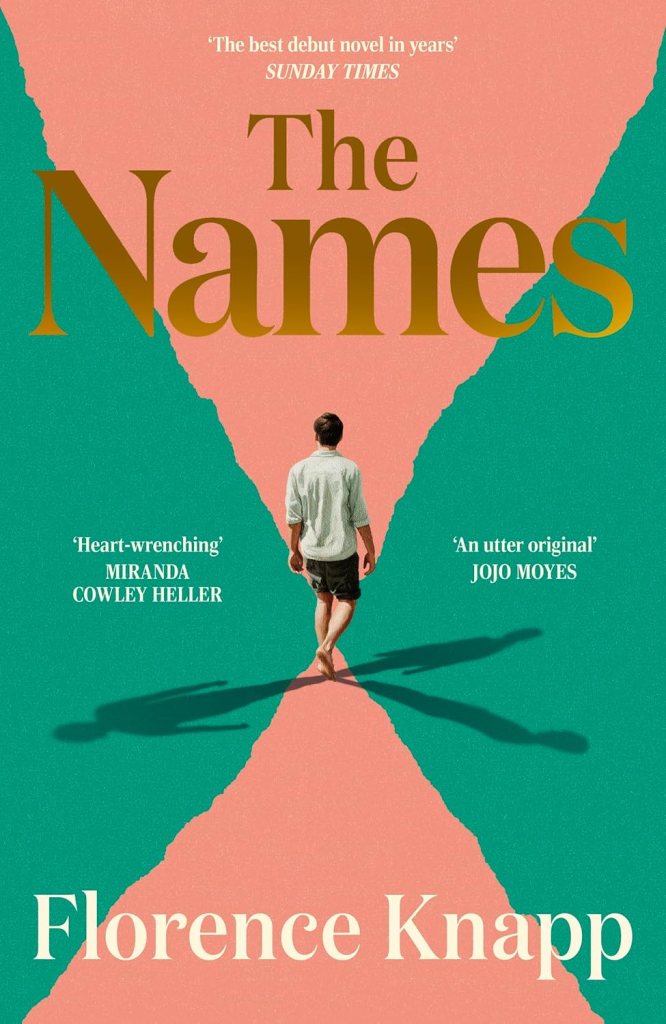
The day after the Great Storm of 1987, Cora sets off to register the birth of her son. Her husband has instructed her to name the baby Gordon, like himself and his father before him. But what if she were to call the child Julian, a name she loves — or Bear, as his nine-year-old sister Maia suggests?
We’re then shown three versions of the family’s life unfolding, shaped by Cora’s choice and the reaction of her domineering husband; alternate lives in which her son is named Bear or Julian or Gordon, and which we revisit at seven-year intervals in 1994, 2001, 2008, 2015 and 2022.
The premise is brilliantly executed. Knapp shows how the consequences of Cora’s decisions at the Registry Office forge who she and her children will become. The three narratives are also very cleverly used to shine a light on the realities of domestic abuse. Each shows the abuse playing out in different ways, enabling the author to explore a number of scenarios and permutations. This can make for tough reading, but the characters of Cora, Maia and Bear-Julian-Gordon are so convincingly and warmly drawn that you’ll want to stay by their sides. In a masterstroke, Knapp makes the husband a respectable middle-class doctor, who looks to all the world like a perfect family man.
The Names is a highly perceptive and wise novel about survival, resilience, free will and love, and a remarkable achievement for a debut author. It’s taught me a lot.
Florence Knapp, The Names, 344 pp., Phoenix 2025.
 Bibliophile
2 responses
What an absolutely fascinating way to tell a family’s story! And it sounds as though this tells the story of the impact of dysfunction and abuse without being preach-y. To me, that takes real skill. It sounds very interesting in a psychological way, too, and I’m glad you enjoyed it.
LikeLiked by 1 person
Thanks, Margot. It’s kind of amazing that no one’s had this alternate-names idea before now. And you’re right, the pitfalls of being preach-y or overly sentimental are avoided. It’s incredibly nuanced and skilfully done.
LikeLiked by 1 person