
Setting: 16th-century Medici Florence (Italy)
First line: Lucrezia is taking her seat at the long dining table, which is polished to a watery gleam and spread with dishes, inverted cups, a woven circlet of fir.
Maggie O’Farrell’s The Marriage Portrait is a hugely satisfying novel. O’Farrell takes her inspiration from a snippet from history — the mysteriously brief life of Lucrezia di Cosimo de’ Medici (1545-1561) — and Robert Browning’s 1842 poem ‘My Last Duchess’, which suggests that Lucrezia was murdered by her husband, the Duke of Ferrara. The resulting novel is an outstanding example of literary crime.
Figuring out whether or not Lucrezia was murdered involves a deep dive into the sixteenth-century court life of Medici Florence and the paradoxical status of aristocratic girls like Lucrezia. In many ways ultra-privileged, they also led incredibly constrained lives, their primary role being to boost the status of their families through advantageous matches and the production of heirs. Pawns in the power plays of their fathers and husbands, they had very little say in their own destinies. Lucrezia finds solace in her love of drawing and painting — just one of the ways O’Farrell brings this unusual, spirited young woman to life as she seeks to survive her highly dangerous marriage.
The Marriage Portrait is a standout read — I loved its ingenuity, its clever construction and its heart. Highly recommended.
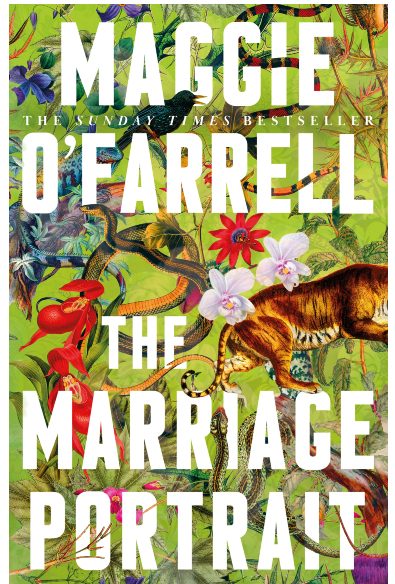
Maggie O’Farrell, The Marriage Portrait (Tinder Press 2022)
 Bibliophile